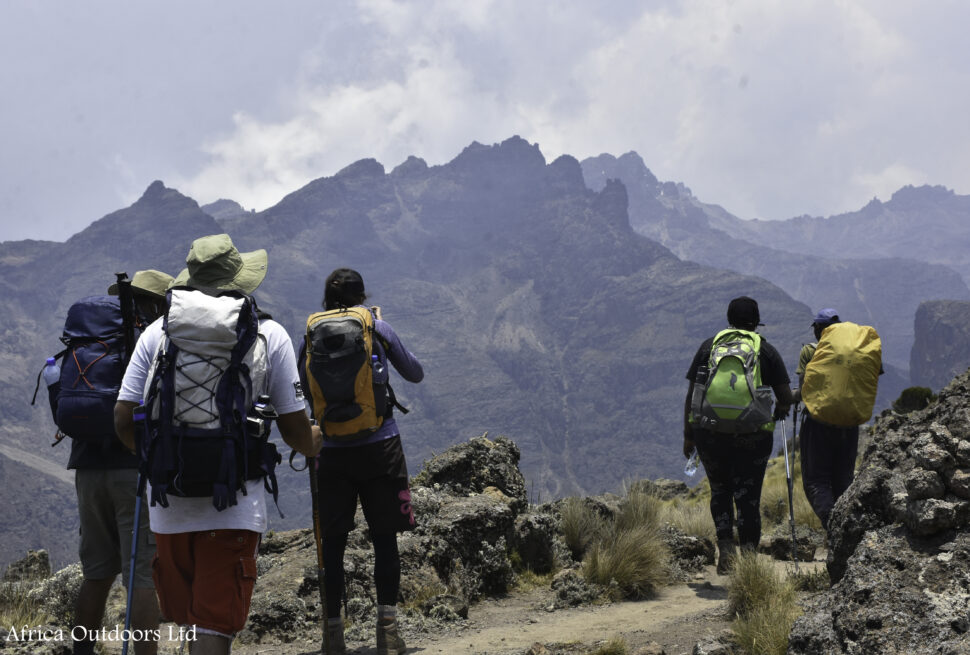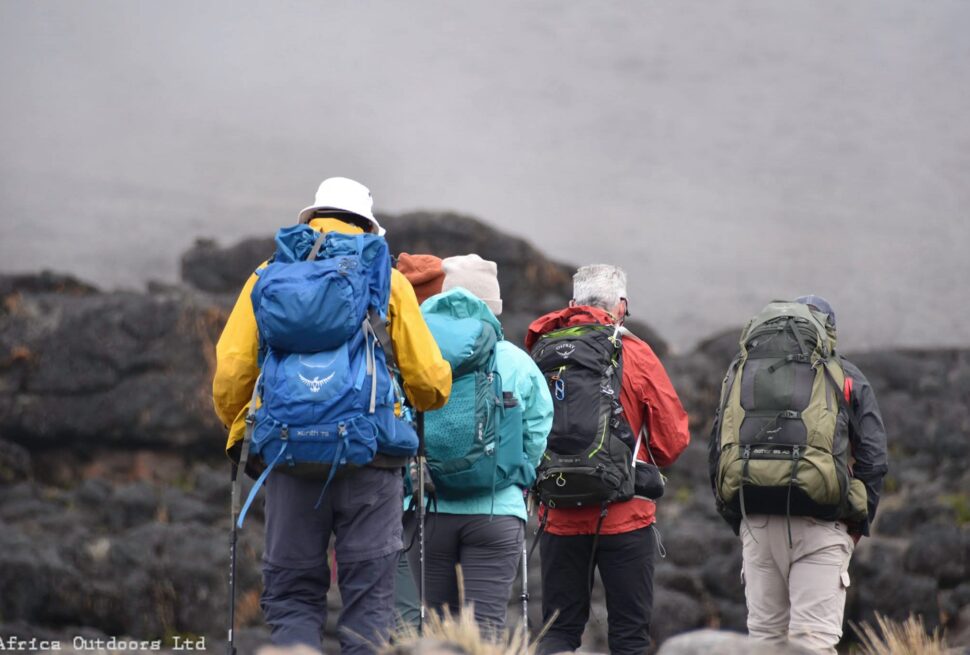
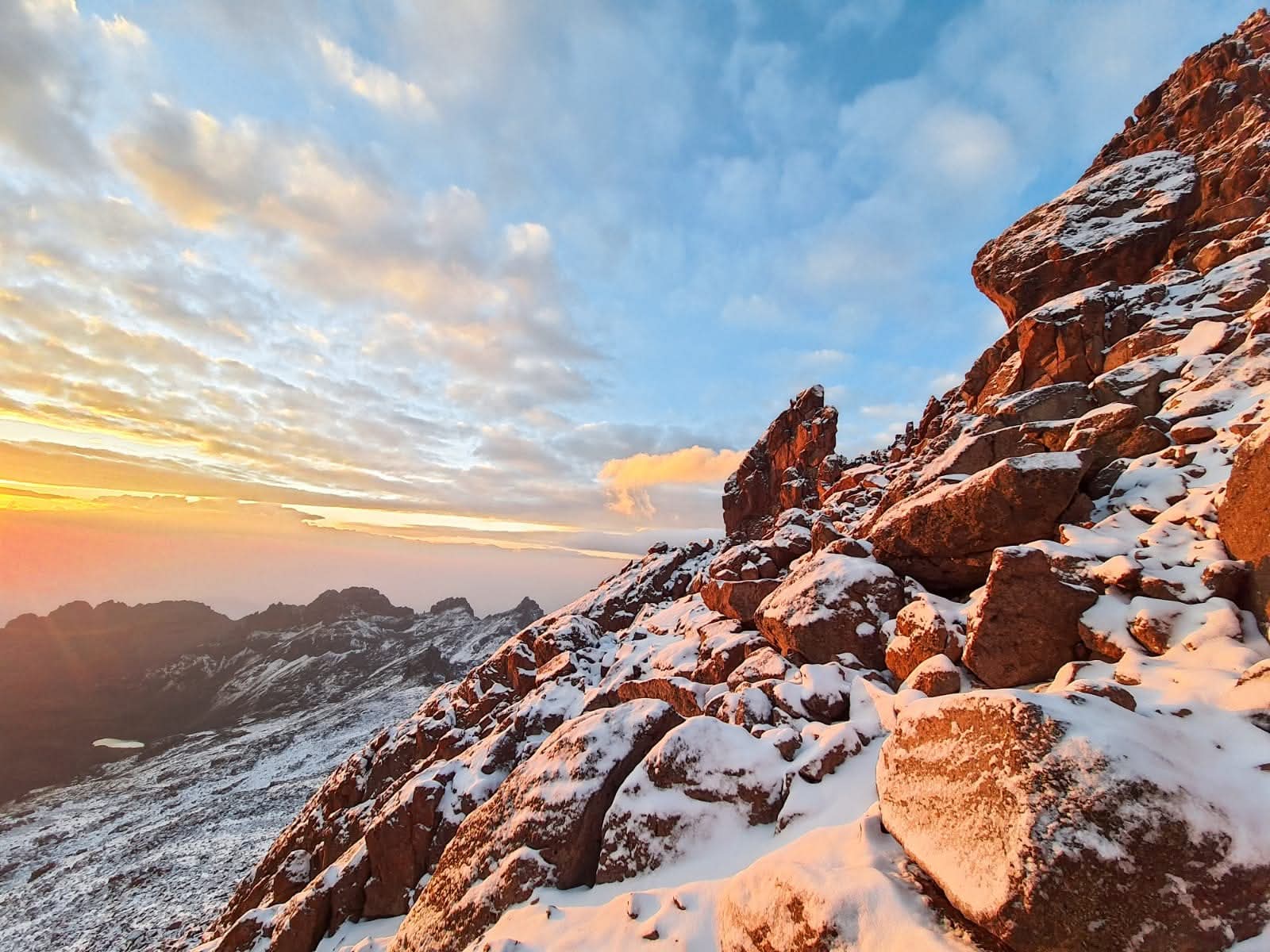
Mount Kenya is Africa’s second-highest mountain, rising to 5,199 metres (17,057 ft). It is an ancient extinct volcano and a UNESCO World Heritage Site, surrounded by Mount Kenya National Park.
The mountain has three main summits:
- Batian – 5,199 m — the highest summit and a technical climbing peak.
- Nelion – 5,188 m — a technical climbing peak.
- Point Lenana – 4,985 m — the highest summit normally reached by trekking without technical climbing equipment.
For most hikers, Point Lenana is the goal. The summit can be reached through several trekking routes, including Sirimon, Chogoria and Naro Moru.
🌿 What makes Mount Kenya special?
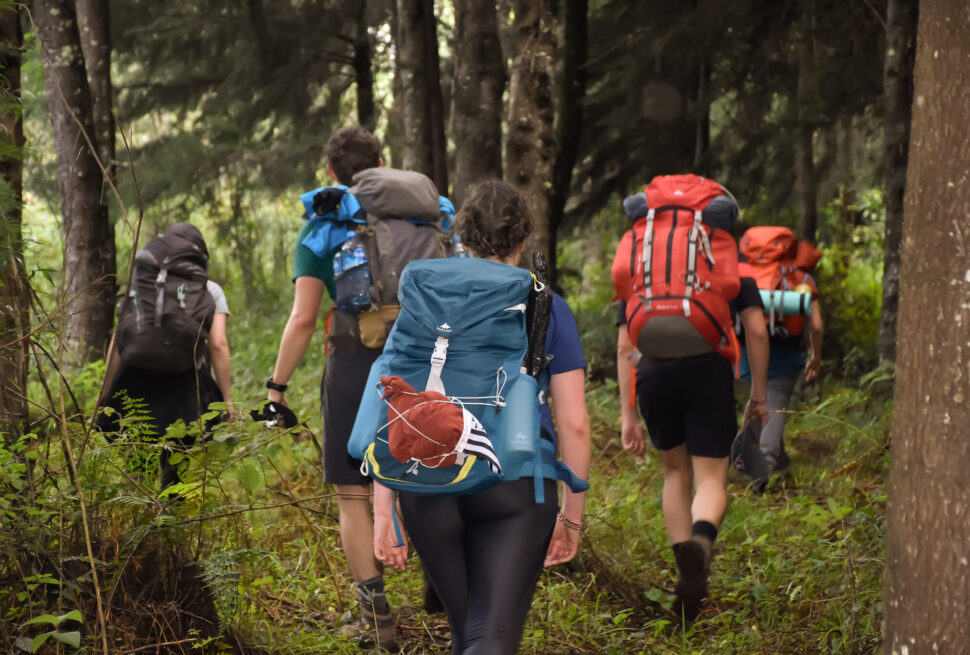
A Mount Kenya trek takes you through several spectacular ecological zones:
🌳 Montane Forest → 🌿 Bamboo → 🌱 Moorland → 🌵 Afro-alpine Zone → 🪨 Alpine Desert → 🏔️ Summit
Along the way, trekkers can experience giant lobelias and groundsels, dramatic valleys, alpine lakes, rocky peaks and spectacular sunrise views.
📅 Best Time to Climb Mount Kenya
Mount Kenya can be climbed throughout the year, but the best conditions generally occur during the dry seasons.
⭐ January – February
Excellent climbing season
- Generally dry and clear
- Good visibility
- Firmer trails
- Excellent conditions for Point Lenana
- Good photography conditions
January and February are among the most consistently recommended months for trekking.
⭐ July – September
Another excellent climbing season
- Generally dry
- Clear mornings
- Good trail conditions
- Excellent summit visibility
- Cooler temperatures, especially at high altitude
July, August and September are particularly good choices for trekkers looking for reliable dry-season conditions.
⚠️ March – June
Long-rain period
Rain, mud, cloud and reduced visibility become more common, particularly in April and May. Treks are still possible, but conditions can be more challenging.
⚠️ October – December
Short-rain period
Conditions become more unpredictable, with increased chances of rain and muddy trails. However, experienced hikers can still climb during this period when weather conditions are favourable.
🗓️ Mount Kenya Climbing Calendar
| Months | Conditions | Recommendation |
|---|---|---|
| January | Dry & generally clear | ⭐⭐⭐⭐⭐ Excellent |
| February | Dry & clear | ⭐⭐⭐⭐⭐ Excellent |
| March | Transition | ⭐⭐⭐⭐ Good early |
| April | Wet | ⭐⭐ Challenging |
| May | Wet | ⭐⭐ Challenging |
| June | Improving/drier | ⭐⭐⭐⭐ Good |
| July | Dry & cool | ⭐⭐⭐⭐⭐ Excellent |
| August | Dry & clear | ⭐⭐⭐⭐⭐ Excellent |
| September | Dry & clear | ⭐⭐⭐⭐⭐ Excellent |
| October | Variable | ⭐⭐⭐ Good |
| November | Wet/variable | ⭐⭐ Challenging |
| December | Variable/improving | ⭐⭐⭐ Good |
🏆 Best overall months
January, February, July, August and September are my top choices for a Mount Kenya trekking holiday.
If your priority is good weather, clear summit views and easier trail conditions, I would particularly recommend January–February or July–September.
🥾 Recommended routes
- Sirimon Route: gradual ascent and generally considered one of the better approaches for acclimatization.
- Chogoria Route: spectacular scenery, including valleys, lakes and dramatic landscapes.
- Chogoria–Sirimon Traverse: excellent option for experiencing different sides of the mountain.
- Naro Moru Route: shorter and more direct, but includes the challenging Vertical Bog
For first-time trekkers, a 5-day or 6-day itinerary is preferable to rushing the climb, as additional time allows better acclimatization.