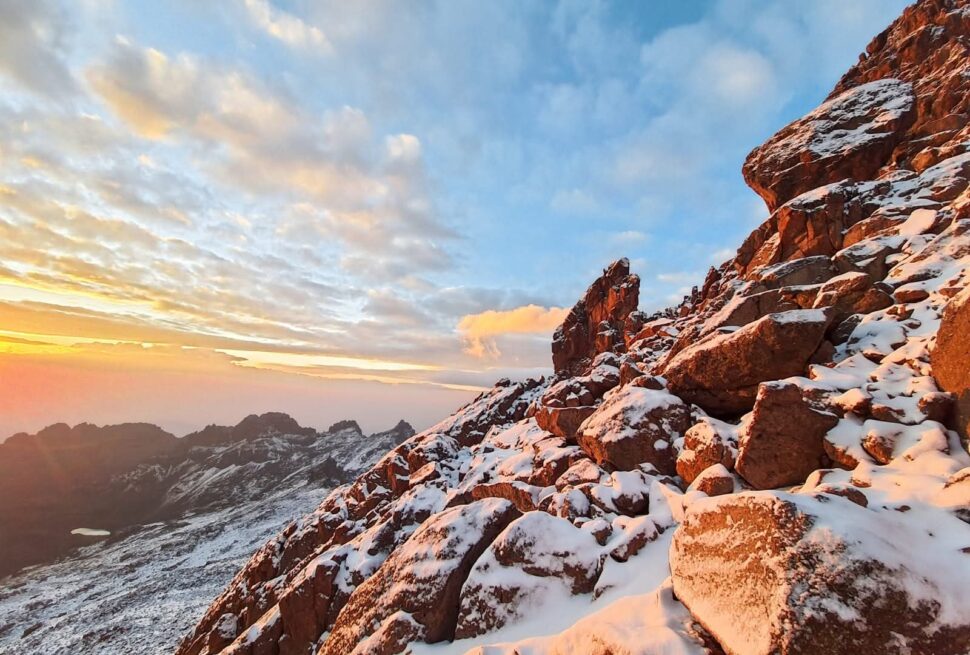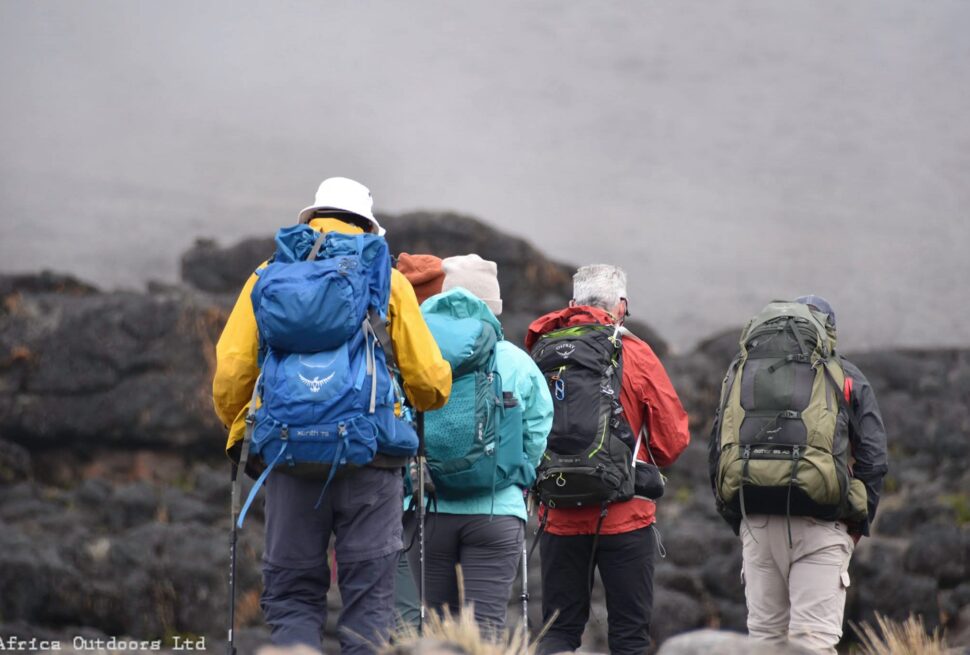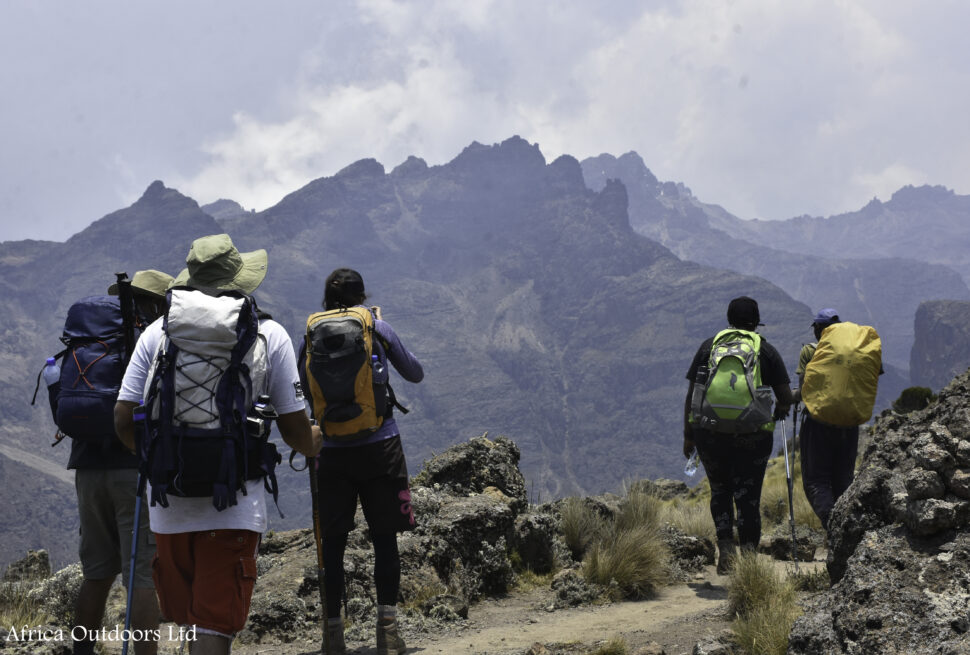
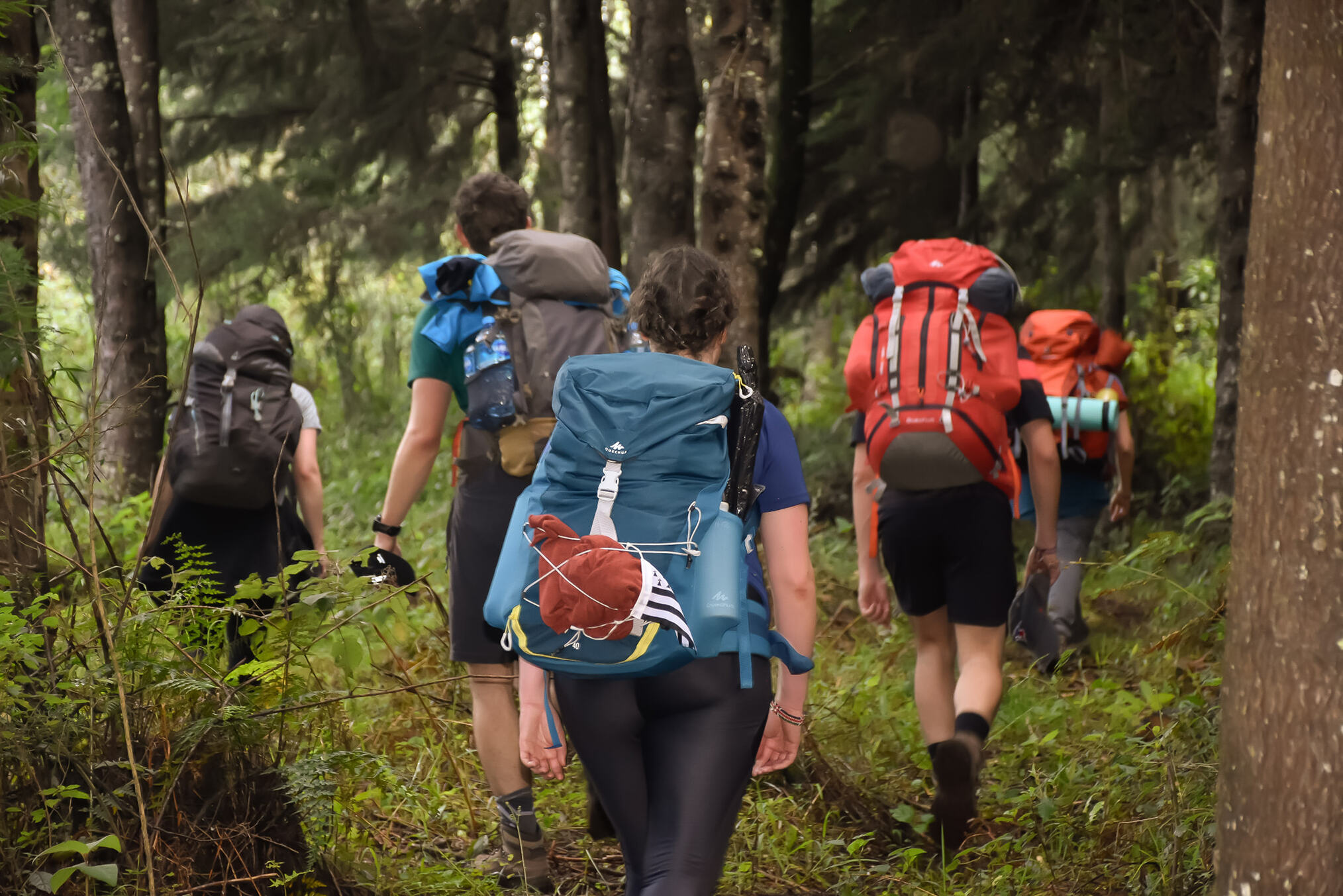


Kilimanjaro conditions change dramatically from warm rainforest to freezing alpine conditions, so proper layering is essential. This checklist works for Marangu, Machame, Lemosho, Rongai and Northern Circuit routes.
🥾 1. Footwear
- ☐ Waterproof hiking boots — well broken-in
- ☐ Lightweight camp shoes/sandals
- ☐ 3–5 pairs of hiking socks
- ☐ 1–2 pairs of warm thermal socks
- ☐ Gaiters — optional but useful
Important: Never start Kilimanjaro with brand-new boots.
🧥 2. Clothing
Base layers
- ☐ 2–3 moisture-wicking T-shirts
- ☐ Thermal base-layer top
- ☐ Thermal base-layer bottom
- ☐ 2–3 pairs of hiking trousers
- ☐ Fleece jacket
- ☐ Warm/down insulated jacket
- ☐ Waterproof/windproof jacket
- ☐ Waterproof trousers
Cold-weather gear
- ☐ Warm beanie
- ☐ Sun hat/cap
- ☐ Warm gloves
- ☐ Thermal/liner gloves
- ☐ Neck gaiter/buff
- ☐ Warm fleece or neck covering
Summit night is extremely cold, so bring enough layers to stay comfortable while moving slowly at high altitude.
🎒 3. Backpacks & Bags
- ☐ 30–40 L daypack
- ☐ Waterproof backpack cover
- ☐ 60–90 L duffel bag for porter transport
- ☐ Waterproof/dry bags
- ☐ Small bags for organizing clothing
- ☐ Plastic bags for wet/dirty clothing
Your daypack should contain only what you need during the day’s hike.
💤 4. Sleeping Equipment
- ☐ Four-season sleeping bag suitable for temperatures around -10°C or colder
- ☐ Sleeping bag liner
- ☐ Inflatable or compact pillow
- ☐ Sleeping mat — camping routes, unless provided
- ☐ Earplugs — optional
For Marangu, huts are provided, but you still need a sleeping bag.
🥤 5. Water & Hydration
- ☐ 2–3 L water capacity
- ☐ Water bottles/hydration bladder
- ☐ Insulated/thermos flask — especially for summit night
- ☐ Water purification tablets/filter — optional
- ☐ Electrolytes
- ☐ Personal energy snacks
Keep your water bladder protected from freezing temperatures during summit night.
🥾 6. Trekking Equipment
- ☐ Trekking poles
- ☐ Headlamp
- ☐ Spare batteries
- ☐ Sunglasses with UV protection
- ☐ Sunscreen — SPF 30–50+
- ☐ Lip balm with SPF
- ☐ Small personal first-aid kit
- ☐ Whistle
- ☐ Gaiters — optional
🧴 7. Personal Items & Toiletries
- ☐ Toothbrush & toothpaste
- ☐ Biodegradable wet wipes
- ☐ Small quick-dry towel
- ☐ Hand sanitizer
- ☐ Toilet paper/tissues
- ☐ Biodegradable soap
- ☐ Personal medication
- ☐ Basic toiletries
- ☐ Small rubbish/waste bags
🔋 8. Electronics
- ☐ Mobile phone
- ☐ Power bank
- ☐ Charging cables
- ☐ Camera
- ☐ Extra batteries
- ☐ Headlamp
- ☐ Waterproof phone pouch
Keep batteries and electronics warm at night because cold temperatures can reduce battery performance.
📄 9. Important Documents
- ☐ Passport
- ☐ Travel insurance documents
- ☐ Emergency contact details
- ☐ Copies/digital copies of important documents
- ☐ Personal medical information
- ☐ Cash for tips and personal expenses
🏔️ 10. Summit Night Essentials
Keep these items in your daypack rather than inside your porter duffel:
- ☐ Headlamp + spare batteries
- ☐ Thermal base layers
- ☐ Fleece
- ☐ Down/insulated jacket
- ☐ Waterproof jacket
- ☐ Waterproof trousers
- ☐ Warm gloves
- ☐ Warm hat
- ☐ Neck gaiter
- ☐ Warm thermal socks
- ☐ Trekking poles
- ☐ Sunglasses
- ☐ 1–2 L water
- ☐ Thermos with a warm drink
- ☐ High-energy snacks
- ☐ Camera/phone
🚫 Avoid Overpacking
You do not need to carry your entire luggage up the mountain. On routes with porter support, keep your daily essentials in your daypack and put the rest in your porter duffel.