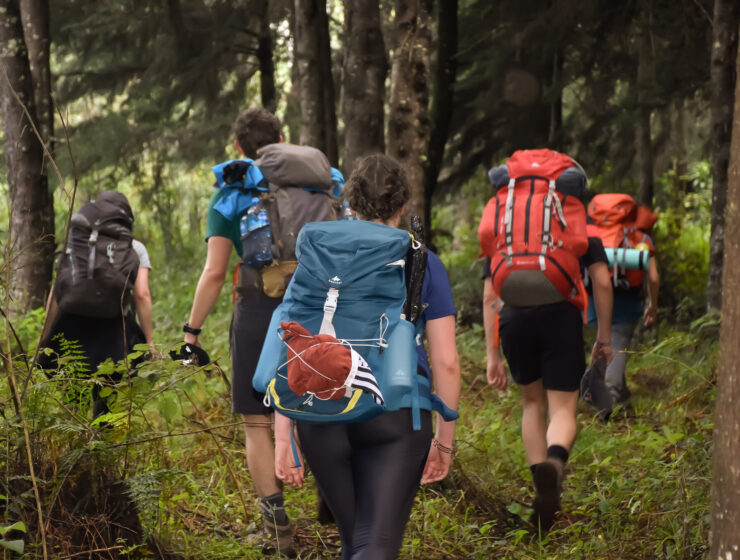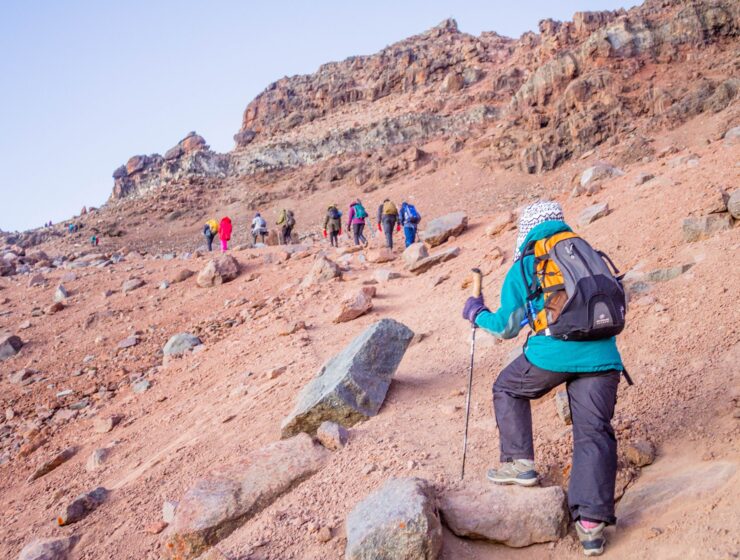
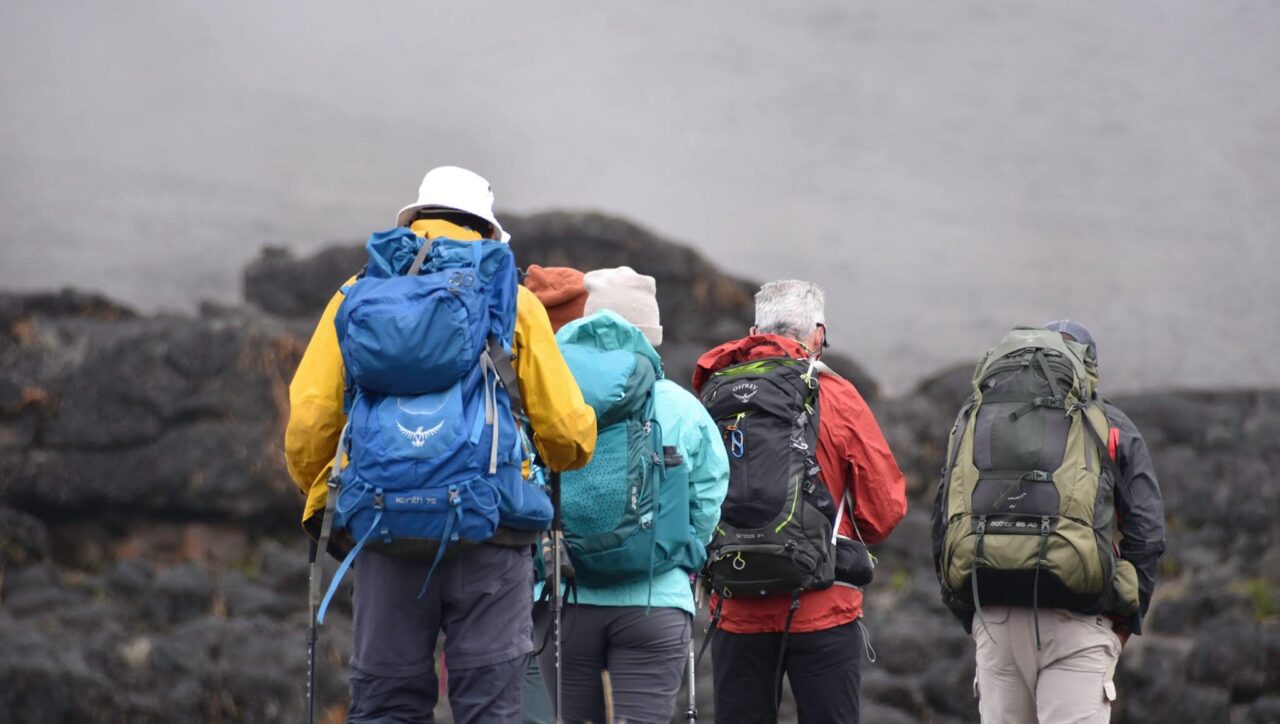
For a Kilimanjaro climb, especially Machame, Lemosho, Marangu or Rongai, prepare for everything from warm rainforest conditions to freezing summit temperatures around 5,895 m.
🎒 Essential Kilimanjaro Gear
🥾 Hiking & Footwear
- Waterproof hiking boots — broken in before the climb
- Lightweight shoes/sandals for camp
- 3–5 pairs of hiking socks
- 2 pairs of warm thermal socks
- Gaiters — optional but useful in mud/snow
- Trekking poles
- Microspikes — optional, depending on conditions
🧥 Clothing System
Base layer
- 2–3 moisture-wicking T-shirts
- 1–2 thermal long-sleeve tops
- 1–2 thermal long underwear/bottoms
Mid layers
- Fleece jacket
- Lightweight insulated jacket
- Warm down/synthetic jacket
Outer protection
- Waterproof hiking jacket
- Waterproof hiking trousers
- Lightweight hiking trousers
- Warm trekking trousers
🧤 Summit Clothing
The summit night is the coldest part of the trek.
- Warm insulated jacket
- Waterproof shell jacket
- Thermal top and bottom
- Warm fleece
- Warm gloves
- Waterproof/insulated gloves
- Warm wool/fleece hat
- Buff/neck gaiter
- Balaclava — recommended
- 2 pairs of warm socks
🎒 Bags
- 30–40 L daypack
- 70–90 L duffel bag for personal equipment
- Waterproof backpack cover
- Dry bags/waterproof packing bags
- Small waterproof bag for documents and electronics
Tip: Keep important clothing and sleeping equipment in waterproof bags inside your duffel.
🛏️ Sleeping Equipment
- Warm sleeping bag — ideally rated around -10°C to -15°C for summit conditions
- Sleeping bag liner
- Sleeping bag compression/storage bag
- Small travel pillow or inflatable pillow
- Sleeping mat — usually supplied by the operator if camping
For Marangu, huts are provided, but a warm sleeping bag is still essential.
💧 Hydration & Food
- 2–3 L water capacity
- Water bottles/hydration bladder
- Insulated water bottle for summit night
- Electrolyte tablets
- Energy bars
- Trail mix/nuts
- Dried fruit
- Chocolate
- Personal snacks
Avoid relying entirely on a hydration bladder on summit night because the tube can freeze.
🧢 Sun & Weather Protection
- Sun hat/cap
- Sunglasses with UV protection
- Sunscreen SPF 30–50+
- Lip balm with SPF
- Buff/neck gaiter
- Waterproof cover for electronics
🔦 Electronics
- Headlamp
- Spare headlamp batteries
- Phone
- Power bank
- Charging cables
- Camera
- Spare camera batteries/memory card
- Watch/GPS — optional
Headlamp + spare batteries are essential for summit night.
🧴 Personal Items
- Toothbrush/toothpaste
- Biodegradable wet wipes
- Hand sanitizer
- Small towel
- Toilet paper/tissues
- Lip balm
- Personal toiletries
- Earplugs
- Small plastic/waste bags
- Quick-dry towel
🩹 First-Aid & Personal Medication
- Personal prescription medication
- Basic first-aid kit
- Blister plasters
- Adhesive tape
- Pain relief medication
- Antiseptic wipes
- Small bandages
- Rehydration salts
- Any altitude medication prescribed for you by a clinician
Your guide/operator should also carry a more comprehensive first-aid and emergency kit.
📄 Important Documents
- Passport
- Visa/entry documentation if applicable
- Travel insurance details
- Emergency contact information
- Copies of important documents
- Flight information
- Cash/card
- Booking confirmation
⭐ Top 15 Items You Should Not Forget
- Waterproof hiking boots
- Warm sleeping bag
- Down/insulated jacket
- Waterproof jacket
- Thermal base layers
- Warm gloves
- Warm hat
- Headlamp + spare batteries
- Trekking poles
- Sunglasses
- Sunscreen
- 3 L water capacity
- 30–40 L daypack
- Duffel bag
- Personal medication
🏔️ World To Africa Safaris Recommendation
For clients climbing Kilimanjaro, I would use a two-bag system:
Daypack: water, rain jacket, fleece, snacks, camera, sunscreen, documents and personal items.
Duffel: sleeping bag, clothes, thermal layers, summit gear and other equipment carried by the porters.
Most important: Don’t underestimate the summit. Even when temperatures are comfortable in Moshi, the summit can be well below freezing, with strong wind making it feel considerably colder. Proper layering and a warm sleeping bag are therefore critical.